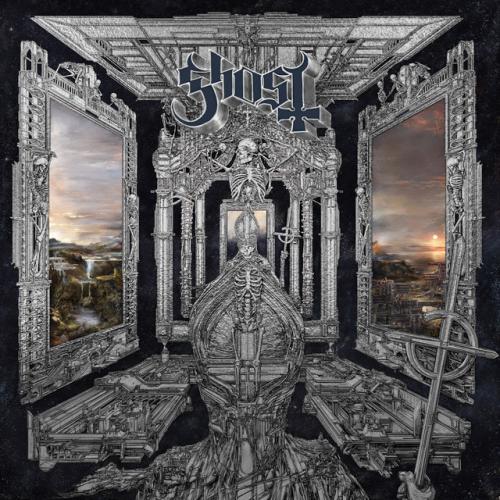
Skeletá
Ghost
Ghost still dress like the most dangerous band at the party and write choruses that your neighbours could sing. Skeletá leans further into that combination, with Tobias Forge giving the songs a more personal focus beneath the costumes and religious imagery.
Peacefield makes the scale clear from the start. It has the shape of a big eighties rock anthem, with a chorus that seems built for a room full of voices. Lachryma follows with a heavier riff and a strong melodic turn. The guitar gives the song an edge, while the vocal keeps it immediately approachable.
Satanized is another effective single. Its shuffle and chorus make it easy to remember, and the darker imagery sits comfortably inside what is essentially very accessible rock music. Ghost have always understood that a sinister theme and a good tune can get along perfectly well.
De Profundis Borealis is one of the album's strongest tracks. The piano opening gives the guitars somewhere to arrive from, and the galloping rhythm adds energy without turning the song into a straight metal workout. There's a confidence to the arrangement that makes the big gestures feel earned.
The album is less convincing when it relies too heavily on familiar hard rock moves. Missilia Amori has plenty of swagger, but its obvious approach doesn't carry the same emotional interest as the stronger material. Some of the slower songs also take a while to reveal their character.
Umbra adds a different groove late in the record, and Excelsis gives the ending a softer, more reflective mood. That finish suits an album concerned with inner trouble and mortality, even if it offers less of the sharp humour that made some earlier Ghost songs so distinctive.
Skeletá is easy to enjoy, and its best songs have more feeling than the spectacle might suggest. It won't satisfy anyone who wants Ghost to return to their earliest sound. For listeners happy to follow Forge into big melodic rock, there's a strong set of songs behind the mask.
