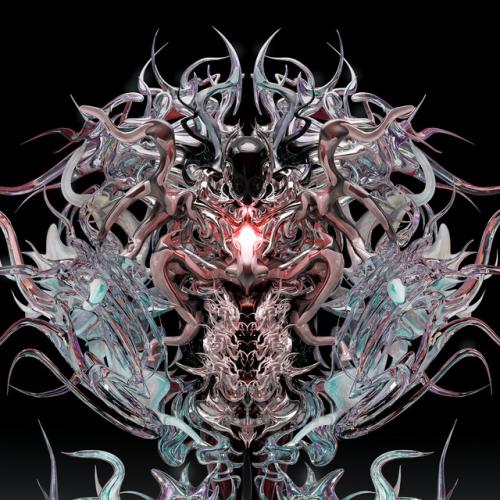
Red
Red gives heavy music an unusually alert sense of space. King Crimson can make a repeated guitar figure feel enormous, then leave a small sound exposed long enough for it to become unsettling. The five tracks draw much of their strength from the distance between those extremes.
The instrumental title track establishes the album's physical impact. Robert Fripp's guitar has a hard, abrasive edge, and John Wetton's bass adds weight without simply disappearing beneath it. Bill Bruford keeps the movement sharply articulated through the changes. The riffing is forceful, but the band's internal responses make the performance feel tense and mobile.
Fallen Angel introduces a more openly melodic voice. Wetton sings with a directness that helps the song's violence register as human loss. The gentler passages give its heavier returns a disturbing force, while the wind instruments add colours that the guitar cannot provide. The arrangement allows tenderness and menace to remain close together.
One More Red Nightmare finds another way to make the band sound unstable. The percussion strikes through the guitar and bass with a rough, metallic character, and the vocal gives the song an almost defiant energy. Its most exciting passages come from the way those sounds press against each other while holding the rhythm in place.
Providence requires a different kind of attention. Its improvised movement takes time to establish itself, with David Cross's violin and the bass creating an exposed, uncertain atmosphere. The eventual surge is effective because the opening has offered so little reassurance. It is the least immediately satisfying piece, yet its position gives the album a valuable stretch of unfamiliar ground.
Starless makes the strongest case for the band's patience. The opening melody and Wetton's restrained singing carry a real sadness. The extended instrumental build then narrows attention to repetition and accumulating pressure, before the full arrangement breaks open. When the main melody returns, its emotional meaning has changed through everything that intervened.
That closing performance gives Red a scale beyond its compact track list. The album is exact in its arrangements while preserving the sense that the musicians could push the music somewhere dangerous. Its intensity comes from how closely they listen and respond to one another.