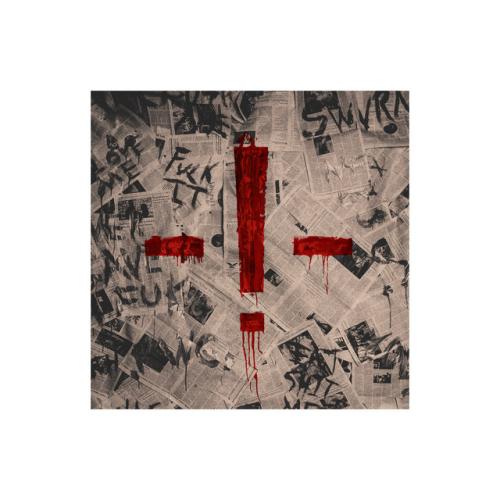
Typhoons
Typhoons makes Royal Blood's riffs move differently. The drums often point toward the dance floor, the melodies are brighter, and the electronic details give Mike Kerr's distorted bass another kind of company. The shift produces a lively record because the band treats rhythm as more than a way to deliver force. The songs still hit hard, but they also know how to turn.
“Trouble's Coming” is an excellent introduction to that balance. Its steady pulse makes the riff feel springy, and Kerr gives the chorus an immediate melodic shape. “Oblivion” carries a similar energy, while “Limbo” lets electronic textures become more central to the movement. Ben Thatcher's playing is particularly effective when a small rhythmic choice changes the feel without breaking the larger groove. The album's strongest hooks work because the beat has already made room for them.
“Boilermaker” is heavier and rougher, with a sharply defined central riff and percussion that gives it a direct physical presence. It provides a useful contrast with the more openly danceable material. Not every repeated idea has the same strength: “Who Needs Friends” leans too heavily on a narrow figure, and the falsetto on “Mad Visions” is less appealing than Kerr's more grounded delivery. The album is better when the details add movement than when they simply make the chorus busier.
The upbeat music also creates an interesting setting for writing shaped by Kerr's experience of addiction and sobriety. The tension is clearest when the melody feels confident while the words describe something much less settled. The piano-led “All We Have Is Now” finally removes the main rhythmic armor and gives the ending an exposed quality. Typhoons is a strong change of direction because it finds pleasure inside an established heavy sound. Its best tracks have a clear sense of release, and the quieter finish makes that release feel connected to a person rather than only a production choice.