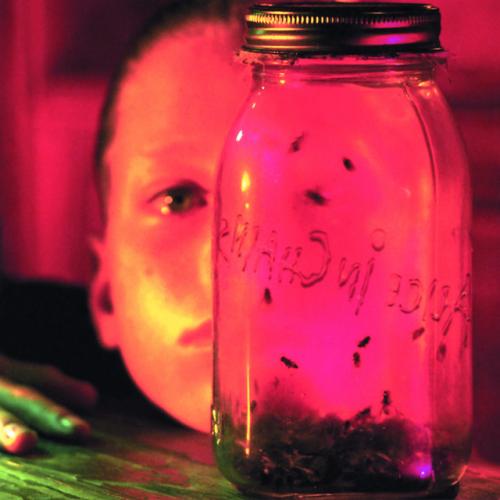
Facelift
Facelift sounds more confident than most debut albums have any right to. Alice in Chains arrive with heavy riffs, a remarkably forceful singer and vocal harmonies that make even a straightforward chorus feel slightly wrong. The musical identity is there before the record has settled into its second song.
We Die Young gives the album an efficient opening: a hard guitar figure, a firm groove and no wasted space. Man in the Box then makes everything larger. Jerry Cantrell's guitar has a sour, talking quality, while Layne Staley turns the chorus into a display of control as much as force. The two voices work particularly well because their combination never softens the unease. A catchy melody can still sound deeply unfriendly.
There is more conventional hard rock here than on some later Alice in Chains records. Sea of Sorrow has a swagger in its movement, and Put You Down is comfortable showing off a little. Those touches make the album less uniformly oppressive than its reputation suggests. They also explain why a few passages feel caught between the band's older influences and a more individual direction.
Bleed the Freak handles that tension well. Its quieter opening creates space for the heavy sections to matter, and the chorus brings melody and menace into the same frame. Love, Hate, Love takes the slower route, putting Staley at the centre of an arrangement that grows steadily more severe. It is a commanding performance, though the vocal intensity can make the surrounding writing feel secondary.
The second half is less tightly organised than the opening run. There are good riffs and strong performances, but not every song has a hook as definite as Man in the Box. The funkier turns also sit a little awkwardly beside the darker material. That unevenness costs Facelift some momentum without diminishing its best work. The album succeeds through the friction between Cantrell's memorable writing and Staley's refusal to make any of it sound easy. Its strongest songs need no historical importance to justify their place.