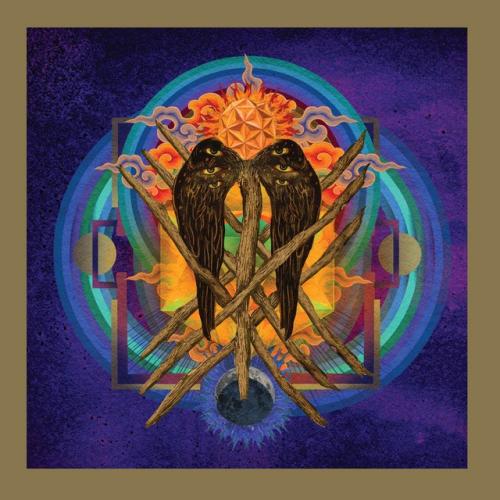
Grief’s Infernal Flower
Grief’s Infernal Flower gives Windhand's heavy sound more melody and a clearer voice. Dorthia Cottrell stands more firmly at the front while guitars retain their dirty, low tone. The band still play slowly, but seek greater differences between songs and more space within the dense distortion.
Crypt Key shows what this achieves. A restrained acoustic beginning gives way to a large riff and a recognisable vocal line. The transition works because melody holds it together. Heavy guitars give the voice a firmer setting instead of making it smaller.
The production helps that relationship. Bass and drums maintain the low movement while guitars have more opportunities for melody and solos. The sound remains substantial without relying on an indistinct layer which absorbs every instrument. Cottrell's voice receives enough room to determine the songs' character more strongly.
The acoustic Sparrow then releases the pressure. Its restrained accompaniment reveals how much force exists in the singing without heavy amplification. That resting point makes the extended songs around it less uniform. Hesperus and Kingfisher again require plenty of time to develop, finding their most convincing larger moments later.
Those two long pieces also provide the main limitation. Not every repetition is necessary to make the ending work, and the later part requires considerable patience. The expansion still offers more than additional running time, however. Stronger singing, clearer melodies and acoustic contrasts make Grief’s Infernal Flower a recognisable step forwards. Windhand retain their slow foundation, but more often use it to carry complete songs. The best passages show how effectively weight and a simple, powerful melody can support one another.